
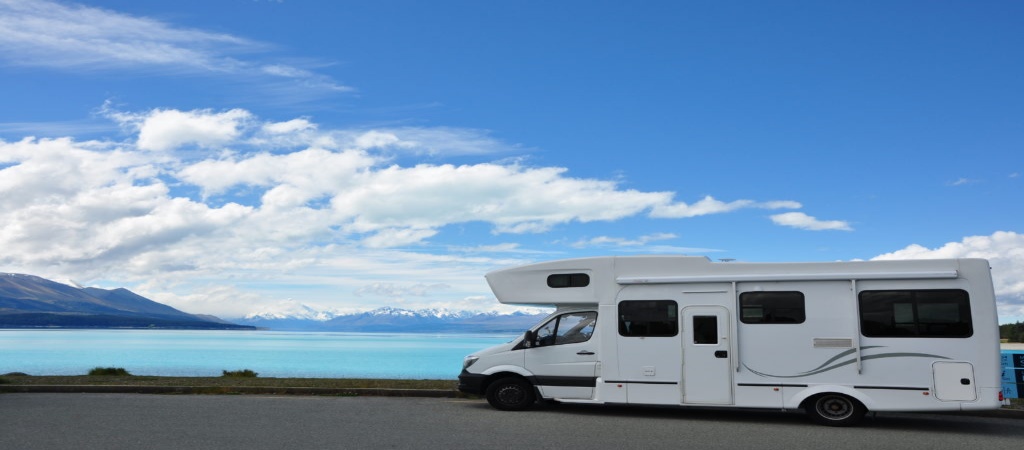

Whether RV insurance is required depends on whether the RV is motorized or towed, whether it is financed, and how you use it. Motorhomes need liability insurance by law in nearly every state, just like a car. Travel trailers and fifth wheels have no legal insurance requirement, but lenders require coverage on financed RVs, and full-time living or renting out the RV calls for specialized coverage.
Below, we break down the rules for each type of RV, what your car insurance does and does not cover while towing, how loans and special uses change the answer, whether a homeowners policy protects your RV, and what an RV policy actually covers.
Is RV Insurance Required?
RV insurance is required by law for motorized RVs, and it is optional by law for towable RVs. The motor is the dividing line. A motorhome is a self-propelled vehicle on public roads, so state auto insurance laws apply to it. A travel trailer or fifth wheel has no motor and rides behind a tow vehicle that already carries its own insurance.
Towables make up most of the RVs on the road. RV manufacturers shipped 342,220 units in 2025, and 306,114 of those were towables, compared with 36,007 motorhomes, according to the RV Industry Association (RVIA). That means close to nine out of ten new RVs carry no legal insurance requirement on their own, even though most still need coverage for other reasons.
The requirement changes with the type of RV and how it is paid for:
Every row ends in the same place: damage to the RV itself is only covered by a policy written for the RV. RV insurance fills that role for every type in the table, and for motorhomes it also satisfies the law. Motorhomes carry the strictest rules, so they come first.
Do You Need Insurance on a Motorhome?
Yes, you need insurance on a motorhome because nearly every state requires the same minimum liability coverage for a motorhome that it requires for a car. The rule applies to all three motorhome classes:
- Class A motorhomes: The largest, bus-style motorhomes built on a heavy commercial chassis.
- Class B motorhomes: Camper vans built inside a full-size van body.
- Class C motorhomes: Mid-size motorhomes built on a truck or van chassis, usually with a cab-over sleeping area.
Alabama's Mandatory Liability Insurance Act requires every self-propelled motor vehicle registered in the state to carry liability insurance of at least $25,000 per person and $50,000 per accident for bodily injury, plus $25,000 for property damage, often written as 25/50/25. A motorhome falls under the same rule as the family car, and the same auto insurance principles of liability, collision, and comprehensive carry over to the RV policy.
Is It Illegal to Not Have RV Insurance?
Yes, it is illegal to not have RV insurance on a motorhome, but it is not illegal to leave a towable RV uninsured. Driving an uninsured motorhome breaks the same law as driving an uninsured car.
The penalties in Alabama are specific. Driving without required liability insurance is a Class C misdemeanor with a fine of up to $500 for a first conviction and up to $1,000 for later convictions, according to the Alabama Department of Revenue. The state also suspends the vehicle's registration, with a $200 reinstatement fee for a first suspension and a $400 fee plus a four-month suspension for repeat violations.
How Much Liability Insurance Do You Need for a Motorhome?
You need more liability insurance for a motorhome than the state minimum, because a motorhome can cause far more damage than a car in a single crash. A Class A motorhome weighs many times more than a passenger car, so a collision can injure several people and destroy multiple vehicles at once.
State minimums cap out quickly. The 25/50/25 minimum pays no more than $50,000 for all injuries in one accident, and anything above the limit becomes a personal debt. Many RV owners choose higher liability limits and add an umbrella policy on top, which extends liability protection across the RV, the car, and the home. Towable RVs handle liability in a completely different way.
Do You Need Insurance on a Travel Trailer?
No, you do not need insurance on a travel trailer by law, because travel trailers have no motor and fall outside state auto insurance requirements. Alabama's mandatory liability law applies to self-propelled vehicles, so a trailer on its own carries no legal requirement.
The missing requirement does not mean missing risk. A travel trailer can be stolen from a driveway, crushed by a falling tree, or flooded at a campsite, and none of that damage is covered without a policy written for the trailer. The tow vehicle's insurance does cover some trailer risks, which is where most confusion starts.
Does Car Insurance Cover a Travel Trailer?
Car insurance covers a travel trailer's liability while the trailer is hitched to your insured vehicle, but it does not cover damage to the travel trailer itself. If the trailer swings into another car while you are towing, your auto liability pays for the other driver's damage.
Physical damage stays outside the auto policy. If the same trailer rolls over, catches fire, or is stolen from a storage lot, the auto policy pays nothing toward the trailer. Boat owners face the identical split, since trailer coverage follows the same liability-versus-damage rule for every towed unit.
Policy details still vary by carrier. Some auto policies limit liability once the trailer is unhitched, and some exclude trailers used as living quarters, so reviewing the auto policy's coverage layers before a trip shows exactly where the tow vehicle's protection ends.
Do You Need Insurance on a Fifth Wheel?
No, you do not need insurance on a fifth wheel by law, because a fifth wheel is a towable RV like a travel trailer. The tow truck's liability extends to the fifth wheel while it is hitched, and damage to the fifth wheel needs its own policy.
Fifth wheels are often the most valuable towables on the road, with full kitchens, slide-outs, and residential appliances. Fifth-wheel shipments jumped 21.6% in 2025, according to RVIA figures, and that growing value is one reason so many owners insure them even without a legal requirement. For many fifth-wheel owners, though, the decision is made by the bank.
Does a Lender Require RV Insurance?
Yes, a lender requires RV insurance on any financed RV, usually comprehensive and collision coverage with the lender listed as the loss payee. This requirement applies to motorhomes and towables alike, because the RV is the collateral for the loan.
Lenders enforce the requirement closely. If coverage lapses, many lenders buy collateral protection insurance and add the cost to the loan, and that coverage protects the lender's interest, not the owner's. Keeping your own policy active is almost always the better deal.
Long RV loans create one more gap. RVs lose value quickly, so a total loss early in a long loan can leave a balance higher than the RV's payout. Gap insurance covers that difference, and some RV policies offer replacement cost coverage in the first years for the same reason. Beyond the loan, the way you use the RV can create its own requirements.
When Do Special Situations Require RV Insurance?
Special situations require RV insurance when you live in the RV full time, rent it to others, or store it for long periods. Each use creates risks that a basic RV policy may not cover.
What Is Full-Time RV Insurance?
Full-time RV insurance is coverage for people who live in their RV as a primary residence, usually for more than six months a year. It adds home-style protections to a standard RV policy, including personal liability around the RV and loss assessment coverage for campground or RV association fees, according to Progressive.
Full-timers have no house policy to fall back on. Full-time RV living has grown, with the 2025 Go RVing owner study estimating 8.1 million RV-owning households in the U.S., a share of whom live on the road year-round. A full-timer's package replaces the protection a homeowners or renters policy would normally provide.
Do You Need Special Insurance to Rent Out Your RV?
Yes, you need special insurance to rent out your RV, because most personal RV policies exclude rental use. Peer-to-peer RV rental platforms often provide some protection while the RV is rented through them, but private rentals arranged directly with a renter usually require a policy written for rental use.
Coverage gaps during a rental can be expensive. A renter who crashes your motorhome under an excluded rental use leaves you with the damage and possibly the liability, so confirm coverage in writing before the first rental.
Do You Need Insurance on an RV in Storage?
Yes, you need insurance on an RV in storage, because fire, theft, falling trees, storms, and rodents damage parked RVs every year. Storage changes which coverages matter, not whether coverage matters.
Many owners keep comprehensive coverage and reduce or pause collision during months the RV never moves, much like boaters handle off-season storage. A financed RV usually must keep both coverages, so check the loan terms before making changes. Some owners skip a separate policy entirely, assuming their home insurance already protects the RV parked in the driveway.
Does My Homeowners Insurance Cover My RV?
No, your homeowners insurance does not cover your RV in most cases, because homeowners policies exclude motor vehicles, including motorhomes. A motorhome needs its own policy whether it is on the road or parked in your yard.
Towable RVs sit in a gray area. Many homeowners policies provide limited liability for a trailer parked and unhitched on your property, and limited coverage for some personal belongings inside it, but they rarely pay for damage to the trailer itself. Homeowners insurance is built to protect the house and its contents, so treating it as RV coverage leaves the most expensive item uninsured. A real RV policy is built for exactly the risks the home policy leaves out.
What Does RV Insurance Cover?
RV insurance covers liability for injuries and damage you cause, physical damage to the RV, and RV-specific risks like campsite liability, belongings, and emergency travel expenses. A full RV policy can include:
- Liability: Bodily injury and property damage you cause to others while driving a motorhome.
- Collision: Damage to your RV from a crash with another vehicle or object, or a rollover.
- Comprehensive: Storm damage, hail, theft, vandalism, fire, and falling trees, including attached equipment like awnings and satellite dishes.
- Personal effects: Electronics, camping gear, and other belongings kept inside the RV.
- Emergency expense: Temporary lodging and transportation when a breakdown or covered loss strands you far from home.
- Full replacement cost: A comparable new RV after a total loss in the first five years, instead of a depreciated payout.
- Campsite liability: Injuries to guests and damage to neighboring property while the RV is parked at a campground.
- Full-timer's coverage: Home-style protection for people who live in their RV.
Comprehensive coverage carries most of the weight for parked and stored RVs, and the same rules that define comprehensive coverage on a car apply to an RV. Southern storms, hail, and falling limbs make comprehensive especially valuable for RVs parked outdoors.
Each RV policy is built from these pieces, so two owners with similar RVs can carry very different protection. That flexibility raises the last question owners ask, which is whether the coverage is worth buying when the law does not require it.
Is RV Insurance Worth It if It's Not Required?
Yes, RV insurance is worth it even when it is not required, because the RV itself is usually one of the most valuable things you own and no other policy pays to repair or replace it. A travel trailer or fifth wheel can cost as much as a car, and a single theft, fire, or storm can wipe out that value overnight.
Owners around Madison and Huntsville who spend weekends at Lake Guntersville or winters near Gulf Shores face the full range of risks: highway miles, campground neighbors, storm seasons, and long stretches in storage. A clear process makes choosing coverage simple:
- Identify your RV type. Motorized RVs need liability by law, and towables need physical damage coverage to protect the unit.
- Check your lender's requirements. Financed RVs need comprehensive and collision with the lender listed.
- Set liability above the minimum. Match liability to what you own, and consider an umbrella policy for extra protection.
- Choose how losses are paid. Decide between actual cash value, agreed value, or replacement cost in the early years.
- Add RV-specific coverages. Consider personal effects, emergency expense, campsite liability, and full-timer's coverage based on how you use the RV.
- Ask about discounts. Multi-vehicle, storage, safety course, claims-free, and paid-in-full discounts all lower the cost.
- Compare carriers. RV pricing differs widely between insurers for the same unit.
Discounts often make the decision easy. Combining an RV policy with your auto and home coverage through bundling is one of the simplest ways to lower the total cost.
Comparing carriers does the rest. Placing RV coverage with the carrier that prices your type of RV best keeps the protection strong and the premium reasonable.
Frequently Asked Questions
Do You Need RV Insurance to Register a Motorhome in Alabama?
Yes, you need RV insurance to register a motorhome in Alabama, because the owner certifies on the registration form that the vehicle carries the required liability coverage. The state verifies coverage electronically, and a registration without active insurance can be suspended.
Does RV Insurance Follow You to Other States?
Yes, RV insurance follows you to other states, and most policies adjust liability to meet the minimum required in the state where you are driving. Coverage in Canada is common on many RV policies as well, so confirm the territory listed on your policy before a long trip.
Does a Pop-Up Camper Need Insurance?
No, a pop-up camper does not need insurance by law, because it is a towable RV with no motor. The tow vehicle's liability covers it while hitched, and a separate policy is needed to cover theft or damage to the camper itself.
Does RV Insurance Cover Belongings Inside the RV?
Yes, RV insurance covers belongings inside the RV when the policy includes personal effects coverage. Personal effects coverage protects items like electronics, cookware, and camping gear, with limits you choose based on what you carry.
Can You Bundle RV and Auto Insurance?
Yes, you can bundle RV and auto insurance, and a multi-vehicle discount often lowers the premium on both policies. Bundling also keeps renewal dates and claims handling in one place.
The Bottom Line
RV insurance is required by law for motorhomes, which must carry at least the state minimum liability, and it is optional by law for travel trailers, fifth wheels, and pop-up campers. Lenders require coverage on any financed RV, and full-time living, renting, and storage each call for the right coverage. Homeowners and auto policies leave the RV itself unprotected, so a policy written for the RV is the only thing that pays to repair or replace it.
RV owners across North Alabama can usually find strong coverage at a fair price once the policy matches how they actually use the RV. The team at UR Choice Insurance is happy to walk through your RV, your loan, and your travel plans with you.
You can reach our team whenever you are ready.