
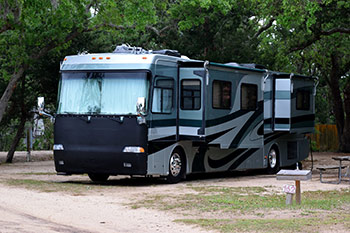

Full-time RV insurance covers your motorhome or travel trailer as a primary residence with homeowner-style protections, while recreational RV coverage treats your RV as a vehicle used for occasional trips and weekend getaways. The two policy types share a foundation of liability, collision, and comprehensive coverage, but full-time RV insurance adds personal liability while parked, broader personal property limits, loss assessment coverage, emergency living expenses, and medical payments for campsite guests that recreational policies do not include. According to the RV Industry Association's 2025 Owner Demographic Profile, an estimated 486,000 Americans now live in RVs full-time, more than double the number reported in 2021. That surge in full-time RV living, driven by remote work and rising housing costs, has made the distinction between these two policy types more important than ever. This article breaks down exactly what each policy covers, what it costs, who needs which type, what happens when you pick the wrong one, and how to switch when your lifestyle changes.
What Is the Difference Between Full-Time RV Insurance and Recreational RV Coverage?
The difference between full-time RV insurance and recreational RV coverage is how each policy classifies and protects the vehicle. Full-time RV insurance treats your RV as your home and combines vehicle insurance with homeowner-style protections, while recreational RV coverage treats your RV as a vehicle you use for leisure travel.
Recreational RV coverage, sometimes called part-time or seasonal coverage, is built for RV owners who keep a permanent house and use their motorhome or trailer for vacations, weekend camping, and road trips. The policy provides liability coverage for accidents while driving, collision and comprehensive coverage for physical damage, and a modest amount of personal property protection. When the RV is parked at home between trips, the owner's homeowners insurance picks up liability and belongings coverage for incidents at the primary residence. The two policies work together because the RV is not the owner's home.
Full-time RV insurance eliminates the homeowners policy from the equation. When you sell your house and move into your RV, or when you spend six or more months per year living in it, you no longer have a homeowners policy backing up your RV coverage. Full-time RV insurance fills that gap by adding personal liability while the RV is parked, higher personal property limits for everything you own inside the vehicle, medical payments for guests who visit your campsite, loss assessment coverage for RV park shared-property fees, and emergency living expense coverage if your RV becomes uninhabitable after a covered loss. The full-timer's policy functions as both your vehicle insurance and your homeowners insurance rolled into a single product.
What Is Considered Full-Time Living in an RV?
Full-time living in an RV is defined by most insurance carriers as using your recreational vehicle as your primary residence for six or more months per year. If you live in your motorhome or travel trailer for 150 or more nights annually, most insurers classify you as a full-time RVer and require full-timer's coverage rather than a recreational policy.
The six-month threshold is the industry standard, but the classification goes beyond simply counting nights. Insurers look at whether you maintain a traditional home address, whether you receive mail at a fixed location, and whether the RV serves as your primary dwelling. A retiree who sold their house and travels the country year-round in a Class A motorhome is clearly a full-timer. A family that lives in a travel trailer at a long-term campground while building a house is also a full-timer, even though the arrangement is temporary.
Gray areas exist for snowbirds, seasonal workers, and digital nomads. A snowbird who spends five months in an RV in Florida and seven months in a house in Alabama technically falls below the six-month RV threshold and may qualify for recreational coverage paired with a home insurance policy. A seasonal worker who lives in an RV for seven months at a job site and returns to a family home for five months crosses the threshold and needs full-timer's coverage. According to Go RVing's 2025 research, 22% of RVers have someone in their household who works remotely, and 54% of those remote workers have worked from their RV. The rise of location-independent work has blurred the line between recreational and full-time use, making honest classification more important than ever.
What Does Full-Time RV Insurance Cover That Recreational Does Not?
Full-time RV insurance covers personal liability while parked, broader personal property limits, loss assessment coverage, emergency living expenses, and campsite medical payments that recreational RV policies do not include. The added coverages function like a homeowners policy layered on top of your vehicle insurance, protecting you for risks that only exist when the RV is your primary residence.
Coverage FeatureRecreational RV PolicyFull-Time RV PolicyLiability While DrivingIncluded (state minimums)Included (state minimums)Collision CoverageAvailable / lender-requiredAvailable / lender-requiredComprehensive CoverageAvailable / lender-requiredAvailable / lender-requiredPersonal Liability While ParkedNot included (homeowners covers)Included (homeowner-style)Personal Property / Contents$5,000 to $10,000 typical limit$20,000 to $50,000+ availableMedical Payments (Campsite Guests)Limited or not includedIncludedLoss Assessment (RV Park HOA Fees)Not includedIncluded (typically up to $5,000)Emergency Living ExpensesLimited or not includedIncluded (temporary housing costs)Average Annual Cost$594 (trailer) / $1,052 (motorhome)$1,500 to $4,000Designed ForWeekend trips, vacations, seasonal useLiving in RV 6+ months per year
Sources: Progressive 2024 RV insurance premium data; Roamly 2026 full-timer coverage guide; LA Insurance full-time RV cost data; Good Sam Insurance Agency full-timer product specifications.
Personal liability while parked is the single most important distinction. Consider this scenario: a visitor trips on your patio mat at a campground and breaks a wrist, resulting in a $40,000 injury claim. With a recreational policy, that parked-and-living liability claim could be denied because the recreational policy does not cover incidents that happen while the RV is functioning as a dwelling. A full-timer's policy responds to exactly that situation because it includes the same type of premises liability that a homeowners policy provides. Without a house and without full-timer's coverage, you have no liability protection for anything that happens at your campsite while your RV is parked.
Personal property limits represent the second major gap. Recreational policies typically cover belongings inside the RV at $5,000 to $10,000, according to Roamly's coverage data. Full-timer policies offer limits of $20,000 to $50,000 or more because everything the policyholder owns, from electronics and clothing to furniture and kitchen equipment, is stored inside the RV. A full-timer who suffers a theft or a fire loses not just camping gear but their entire household of possessions. The higher limits reflect that reality.
What Is Loss Assessment Coverage on an RV Policy?
Loss assessment coverage on an RV policy pays fees charged by an RV park or campground association for repairs to shared property after a covered loss. Loss assessment coverage, typically included in full-timer policies at limits up to $5,000, functions like the loss assessment provision in a condominium insurance policy.
RV parks and long-term campgrounds often operate like small communities with shared amenities: clubhouses, laundry facilities, picnic shelters, swimming pools, and common roads. When a storm, fire, or other covered event damages shared property, the park association may assess each resident a share of the repair cost. Loss assessment coverage pays that fee on your behalf, up to your policy limit. A recreational RV policy does not include loss assessment because the policyholder is a short-term guest, not a resident who shares in the community's financial obligations. Full-timers who live at RV parks for months or years at a time face the same assessment risks that condo owners face, and loss assessment coverage addresses that exposure.
Is Full-Time RV Insurance Better Than Regular RV Insurance?
Full-time RV insurance is better than regular RV insurance for people who live in their RV as a primary residence, but it is unnecessary for people who use their RV for occasional trips while maintaining a permanent home. The "better" policy is the one that matches how you actually use your RV; carrying the wrong type creates coverage gaps or unnecessary expense.
For full-timers, full-time RV insurance is categorically better because it covers risks that recreational policies exclude entirely. Parked liability, high-limit personal property, loss assessment, and emergency living expenses are protections that a full-timer cannot get from any other source once they no longer own a home. Carrying recreational coverage while living full-time is like driving a car with liability-only insurance on a $200,000 motorhome; it technically meets the legal minimum but leaves enormous financial exposure uncovered.
For recreational users, full-time RV insurance costs more than necessary. A weekend camper who stores their trailer in a garage ten months per year and uses it for four or five trips does not need $50,000 in personal property coverage, campsite premises liability, or loss assessment protection. That camper's homeowners policy already covers personal liability and belongings at home, and comprehensive coverage on the RV policy handles theft and storm damage during trips. Paying for full-timer protections that overlap with existing homeowners coverage wastes premium dollars. The RV Industry Association reports that 8.1 million U.S. households own an RV, and the majority of those households use their RV recreationally while maintaining a traditional home. Recreational coverage is the correct fit for the vast majority of RV owners.
Is Full-Time RV Insurance More Expensive?
Yes, full-time RV insurance is more expensive than recreational RV coverage. Full-timer policies cost 25% to 40% more than comparable recreational policies, with annual premiums typically ranging from $1,500 to $4,000 depending on the RV class, value, and coverage limits.
The cost difference reflects the expanded risk profile that insurers assume when they cover a full-time residence. A recreational RV sits in storage most of the year, exposing it to limited risk. A full-timer's RV is on the road or parked at a campsite every day of the year, exposing it to continuous collision, theft, weather, and liability risk. According to Progressive's 2024 data, the average annual premium for a recreational travel trailer policy was $594, and the average recreational motorhome policy was $1,052. Full-time coverage on the same vehicles adds 25% to 40% to those baseline costs, pushing premiums into the $1,500 to $4,000 range depending on the RV's class and value.
Full-time Class A motorhome coverage can exceed $4,000 per year according to RVezy's 2026 cost guide, especially on high-value coaches worth $200,000 or more. The higher premium reflects not just the expanded coverage features but also the higher personal property limits, the premises liability exposure, and the increased annual mileage that full-timers accumulate. Despite the higher cost, full-time RV insurance is still significantly less expensive than carrying a separate auto insurance policy on a motorhome plus a homeowners insurance policy on a traditional house. For families who sold their home to live on the road, the combined savings on mortgage, property tax, homeowners insurance, and utilities often more than offset the higher RV insurance premium.
Do You Need Full-Time RV Insurance If You Live in Your RV?
Yes, you need full-time RV insurance if you live in your RV six or more months per year. Full-time RV insurance is the only policy type that provides the homeowner-style liability, personal property, and emergency living protections that full-time RV residents require.
The need goes beyond convenience. Without full-time coverage, a full-time RVer faces three critical exposures. First, no parked liability protection: if someone is injured at your campsite, you have no insurance to cover their medical bills or your legal defense. Second, inadequate personal property coverage: recreational policies cap belongings at $5,000 to $10,000, which is nowhere near enough to replace everything a full-timer owns. Third, no emergency housing: if a fire, storm, or collision renders your RV uninhabitable, recreational coverage does not pay for a hotel room, meals, or transportation while repairs are completed. Emergency living expense coverage on a full-timer policy handles those costs, which can reach thousands of dollars over a multi-week repair period.
Lenders add another layer of necessity. If your RV is financed and you live in it full-time, your lender may require full-timer's coverage as a condition of the loan. Some lenders monitor usage classifications, and a mismatch between your declared use (recreational) and your actual use (full-time) can trigger a policy review, a coverage downgrade, or a forced-placed insurance policy that costs significantly more than a standard full-timer plan. Disclosing your full-time status honestly from the start avoids these complications and keeps your coverage intact when you need it most.
What Happens If You Have Recreational Coverage but Live Full-Time?
Carrying recreational coverage while living in your RV full-time exposes you to claim denials, policy cancellation, and personal financial liability for losses the insurer refuses to pay. Misclassifying your RV usage as recreational when you actually live in it full-time is a material misrepresentation that gives the insurer grounds to deny claims or void the policy entirely.
Insurance policies require the policyholder to accurately describe how the vehicle is used. When you apply for recreational RV coverage, you are telling the insurer that the RV is for occasional trips and that you maintain a separate primary residence. If you later start living in the RV full-time without updating your policy, the insurer can argue that the information you provided was inaccurate. A claim filed under those circumstances, especially a large liability or total loss claim, can be denied on the basis that the risk was materially different from what the insurer agreed to cover.
The financial consequences of a denial can be severe. A $40,000 campsite liability claim, a $60,000 total loss after a collision, or a $25,000 theft of personal belongings would all fall on your shoulders if the insurer declines the claim due to misclassification. The cost difference between a recreational policy and a full-timer policy is typically a few hundred to a few thousand dollars per year. The cost of a single denied claim dwarfs that difference by a factor of ten or more. Honest disclosure protects your coverage, and an independent agent can help you find the most affordable full-timer option across multiple carriers.
What Type of RV Insurance Do Snowbirds Need?
The type of RV insurance snowbirds need depends on whether they maintain a permanent home in addition to their RV. Snowbirds who keep a house and spend part of the year in an RV typically need recreational RV coverage paired with homeowners insurance, while snowbirds who sold their home and live in the RV year-round need full-time RV coverage.
A classic snowbird scenario involves a couple who owns a house in Alabama and spends four to five winter months in an RV in Florida or along the Gulf Coast. Because they maintain a permanent home and spend fewer than six months in the RV, recreational coverage is usually the correct fit. Their homeowners policy covers personal liability and belongings at the Alabama home, and the recreational RV policy covers the vehicle and limited belongings on the road. The two policies work together without overlap or gap.
The scenario changes when the snowbird sells the house. Without homeowners insurance, the parked liability gap opens, and personal property coverage shrinks to recreational limits. A snowbird who sold their home and travels between seasonal RV parks needs full-timer's coverage regardless of how many months they spend at each location, because the RV is their only residence. The critical question is not "how many months do I travel?" but "do I have a homeowners policy that backs up my RV coverage?" If the answer is no, full-timer's insurance becomes necessary. An umbrella policy layered on top of either setup extends liability limits beyond the base RV policy, which is especially valuable for retirees with significant assets to protect.
How Do You Switch from Recreational to Full-Time RV Insurance?
Switching from recreational to full-time RV insurance involves contacting your insurance agent, disclosing your change in usage, and either upgrading your existing policy with a full-timer endorsement or purchasing a new full-timer policy. The transition should happen before you begin living in the RV full-time, not after, because any gap between when your usage changes and when your coverage updates leaves you exposed.
The process follows these steps:
- Notify your agent or insurer: Tell them you plan to use your RV as a primary residence. Provide the date you expect to begin full-time living.
- Review your current policy: Your agent will identify what your recreational policy covers and where the full-timer gaps exist (parked liability, personal property limits, loss assessment, emergency expenses).
- Get quotes for full-timer coverage: Some carriers offer a full-timer endorsement that adds to your existing policy. Others require a separate full-timer policy. An independent agent can quote both options across multiple carriers to find the best combination of coverage and price.
- Set the effective date: Time the new coverage to begin on or before the date you start living in the RV. There should be zero gap between your old coverage and your new coverage.
- Cancel homeowners insurance (if applicable): If you are selling your house, coordinate the cancellation of your homeowners policy with the start of your full-timer RV policy. Switching coverage mid-term is possible with most carriers; the key is timing the transition so there is no lapse.
The RV Industry Association reports that 36% of current RV owners are first-time buyers, and many of those first-time owners eventually transition from recreational use to extended or full-time living as their lifestyles evolve. Having an agent who understands both policy types makes the switch smooth and avoids the misclassification risks discussed above.
How to Save on Full-Time RV Insurance
Saving on full-time RV insurance involves combining carrier discounts, adjusting your deductible, and working with an independent agent who shops multiple carriers on your behalf. Full-timers can reduce premiums by 20% to 40% through bundling, storage discounts, safety courses, claims-free history, and paid-in-full payment options.
- Bundle your policies: Bundling policies across your RV, auto insurance, and life insurance with the same carrier produces multi-policy discounts of 10% to 25% according to Roamly's 2026 data.
- Complete a safety course: RV safety and defensive driving courses qualify for premium discounts of up to 10% with many carriers. The courses cover maneuvering, campground safety, and emergency procedures specific to large vehicles.
- Maintain a claims-free record: Going three or more years without filing a claim earns claims-free discounts that grow larger each renewal period. Some carriers offer diminishing deductibles that reduce your out-of-pocket cost by 25% each claims-free year.
- Choose a higher deductible: Raising your collision and comprehensive deductible from $500 to $1,000 lowers your annual premium meaningfully while only increasing your out-of-pocket risk by $500 per claim.
- Pay the full annual premium upfront: Paying annually instead of monthly eliminates installment fees of $3 to $8 per month and can save 3% to 8% on the total premium.
- Install anti-theft devices: GPS trackers, alarm systems, and hitch locks reduce theft risk and may qualify for additional carrier discounts. According to Worldmetrics, approximately 17,000 RVs are stolen annually in the United States, so anti-theft measures serve double duty as both a premium reducer and a protection tool.
- Work with an independent agent: Independent agents represent multiple carriers and can compare full-timer quotes side by side. Captive agents who work for a single insurer can only offer that one company's pricing, which may not be the most competitive option for your situation.
Frequently Asked Questions
Does RV Insurance Cover Personal Belongings for Full-Timers?
Yes, full-time RV insurance covers personal belongings through personal property or contents coverage, with limits typically ranging from $20,000 to $50,000 or more depending on the policy. Recreational policies also offer personal property coverage but at much lower limits, usually $5,000 to $10,000. Full-timers carry their entire household of possessions inside the RV, so the higher limits reflect the greater value at risk. Items covered include electronics, clothing, furniture, kitchenware, sporting equipment, and other personal property.
Can You Get Full-Time RV Insurance on a Travel Trailer?
Yes, you can get full-time RV insurance on a travel trailer, fifth wheel, or any towable RV that you use as a primary residence. Full-timer coverage is not limited to motorhomes. Carriers like Progressive, National General, Good Sam, and Foremost offer full-timer endorsements and policies for both motorized and towable RVs. The coverage functions the same way regardless of RV type: it adds personal liability while parked, higher personal property limits, loss assessment, and emergency living expenses to the base travel trailer policy.
Does Full-Time RV Insurance Replace Homeowners Insurance?
Full-time RV insurance replaces homeowners insurance in the sense that it provides the same categories of protection, but it is not a homeowners policy. Full-timer coverage includes personal liability (like homeowners), personal property protection (like homeowners), and emergency living expenses (like homeowners loss of use coverage). If you sell your home and live in your RV full-time, the full-timer policy fills the role that homeowners insurance previously occupied. You do not need both a homeowners policy and a full-timer RV policy unless you own a home in addition to your RV.
How Much Personal Property Coverage Do Full-Timers Need?
Full-timers need enough personal property coverage to replace everything they own inside the RV. The right limit depends on the total value of your belongings. Most full-timers carry between $20,000 and $50,000 in personal property coverage. To determine your limit, inventory the contents of your RV: electronics, clothing, furniture, kitchen items, tools, sporting goods, and any specialty equipment. Add up the replacement cost of each category. That total becomes your target personal property limit.
Is Full-Time RV Insurance Required by Law?
Full-time RV insurance is not specifically required by law beyond the standard liability requirement for motorhomes. Most states require liability coverage on any motorhome driven on public roads, whether the owner uses it recreationally or full-time. The full-timer endorsement that adds personal liability while parked, higher personal property limits, and loss assessment is not mandated by state law. However, lenders may require full-timer coverage on financed RVs used as primary residences, and the practical financial risks of skipping full-timer protection far outweigh the cost savings. Carrying only recreational coverage while living full-time creates motorhome coverage gaps that can result in denied claims and tens of thousands of dollars in personal liability.
What It All Comes Down To
The choice between full-time RV insurance and recreational RV coverage comes down to one question: is your RV your home, or is it your vehicle for trips? Full-timers who live in their RV six or more months per year need the personal liability, expanded property limits, loss assessment, and emergency expense protections that only a full-timer policy provides. Recreational users who maintain a permanent home and take their RV on occasional trips need a standard recreational policy that works alongside their homeowners coverage. Carrying the wrong type creates gaps that surface at the worst possible moment, when you file a claim and the insurer denies it based on how you actually use the vehicle. With 486,000 Americans now living in RVs full-time and 8.1 million households owning an RV overall, matching coverage to usage is the most important insurance decision an RV owner makes.
An independent agent who works with 20 or more carriers can compare both policy types, identify the right fit for your lifestyle, and find the most competitive premium across the market. We help families across Madison, Alabama and throughout the state do exactly that at UR Choice Insurance. Call us at (256) 692-5562 to see how your camper insurance options compare.