
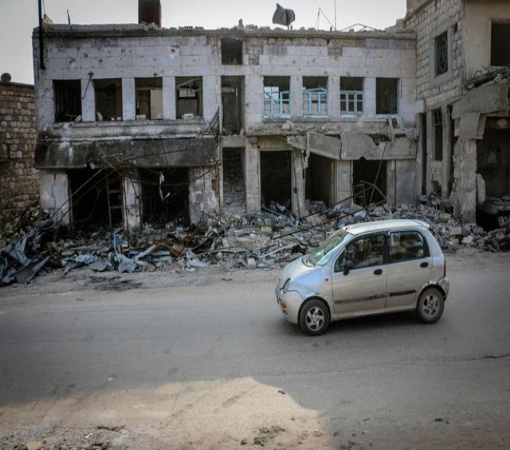

Yes, commercial property insurance covers some natural disasters, including fire, wildfire, lightning, windstorms, tornadoes, and hail, but it excludes others, most importantly floods and earthquakes. Floods and earthquakes need a separate policy or endorsement, and lost income during a disaster closure needs business income coverage added to the property policy.
Below, we break down which natural disasters a standard policy covers and which it excludes, what happens when wind and floodwater damage the same building, how lost income and deductibles work after a disaster, and which policies and preparation steps close the gaps before the next storm.
Does Commercial Property Insurance Cover Natural Disasters?
Commercial property insurance covers natural disasters that damage property through wind, fire, lightning, hail, or the weight of ice and snow, and it excludes natural disasters that damage property through rising water or earth movement. That single dividing line, wind and fire on one side and water and earth on the other, explains most natural disaster claims.
Natural disasters keep growing in cost, which makes that dividing line more important every year. NOAA recorded 27 billion-dollar weather disasters in the United States in 2024, with a combined cost of $182.7 billion. The 2020 to 2024 annual average of $149.3 billion in disaster costs is more than double the 45-year average of $64.8 billion. The table below shows how a standard commercial property policy treats each major type of natural disaster.
The covered rows in that table share one trait: the disaster strikes the building directly through the air or through fire. Those covered disasters deserve a closer look, starting with the wind events that produce the most claims.
Which Natural Disasters Does Commercial Property Insurance Cover?
The natural disasters commercial property insurance covers are tornadoes, windstorms, hail, wildfires, lightning, winter storms, and the wind portion of hurricanes. A commercial property insurance policy pays to repair or replace the building, equipment, inventory, and furniture these disasters damage, up to the policy limit and minus the deductible.
Each covered disaster carries its own policy terms, deductibles, and limitations. Tornadoes and windstorms sit at the top of the list because they strike more businesses than any other covered natural disaster.
Does Commercial Property Insurance Cover Tornado Damage?
Yes, commercial property insurance covers tornado damage, because tornadoes damage property through wind, which is a covered peril under every standard causes of loss form. The policy pays to repair roofs, walls, windows, signs, and contents damaged by tornado winds and the debris those winds throw.
Tornado activity stays well above historical norms. NOAA's Storm Prediction Center counted 1,558 tornadoes in the United States in 2025, above the 15-year average of 1,392. Alabama recorded 72 tornadoes in 2025, tied for the fifth-highest count of any state. Tornado claims often include debris removal, an additional coverage in commercial property policies that pays to clear wreckage after a covered loss. Wind damage from tornadoes overlaps heavily with the second most common covered weather peril, hail.
Does Commercial Property Insurance Cover Hail Damage?
Yes, commercial property insurance covers hail damage to roofs, skylights, siding, signs, HVAC units, and other exposed property. Wind and hail together made up 15% of small-business claims in The Hartford's analysis of more than 1 million small-business policies from 2020 to 2024, and those claims generally involve structural damage to roofs and signs.
Hail coverage often carries special terms in storm-prone regions. Some carriers apply a percentage-based wind and hail deductible, and some add cosmetic damage exclusions for metal roofs, which remove coverage for dents that do not let water in. Wind and hail strike from the sky, and so does lightning, which ignites the next covered disaster on the list.
Does Commercial Property Insurance Cover Wildfires and Lightning?
Yes, commercial property insurance covers wildfires and lightning, because fire and lightning are covered perils under every standard causes of loss form. The policy pays for fire damage, smoke damage, and the electrical damage lightning causes to wiring and equipment.
Fire produces the most expensive claims a small business faces. The average fire claim reached $80,000 in The Hartford's analysis, the costliest claim type in the study. A wildfire destroys an entire building in hours, so the building limit needs to match full replacement cost rather than the purchase price. Fire coverage holds through every season, while winter brings a different set of covered weather losses.
Does Commercial Property Insurance Cover Winter Storm Damage?
Yes, commercial property insurance covers winter storm damage from the weight of ice, snow, or sleet under the Broad and Special causes of loss forms. A roof that collapses under heavy snow or ice is a covered loss under those forms, while the Basic form leaves that loss uncovered.
Frozen pipes during a winter storm are covered when the business kept the heat on or drained the water system, because the standard Special form ties freezing damage to reasonable care. Winter storms rarely cause the largest losses in the Southeast, but hurricanes regularly do, and hurricane coverage splits into two very different parts.
Does Commercial Property Insurance Cover Hurricane Damage?
Commercial property insurance covers hurricane wind damage in most areas, but it does not cover hurricane storm surge or flooding, which needs a separate flood policy. A hurricane that tears off a roof triggers property coverage, and the same hurricane pushing seawater into the first floor triggers flood coverage.
Hurricane coverage carries two more limits that surprise many owners. Interior damage from rain is covered only when wind first damages the roof or walls and creates an opening for the rain to enter, under the standard Special form. In coastal states, many policies also apply a separate named storm deductible or exclude wind entirely, which requires a windstorm policy. Insureon notes that Atlantic hurricane season runs from June 1 to November 30. Storm surge marks the point where covered disasters end and excluded disasters begin.
What Natural Disasters Are Not Covered by Insurance?
The natural disasters not covered by standard commercial property insurance are floods, storm surge, earthquakes, landslides, mudslides, and other forms of earth movement. These exclusions create the largest coverage gaps in most small-business insurance programs, because a single event damages thousands of properties at once.
Insurers sell these perils separately so they can price them by location. Flood and earthquake risk change sharply from one address to the next, and pooling them into every property policy would raise premiums for businesses with no exposure. Flood creates the most uninsured losses of any excluded disaster.
Does Commercial Property Insurance Cover Flood Damage?
No, commercial property insurance does not cover flood damage from overflowing rivers, heavy rain runoff, or storm surge. Businesses buy flood insurance through the National Flood Insurance Program (NFIP) or a private flood carrier.
Flood risk reaches well beyond mapped flood zones. FEMA reports that from 2014 to 2024, nearly one-third of NFIP claims came from properties outside high-risk flood areas. NFIP coverage for commercial buildings is capped at $500,000 for the building and $500,000 for contents, and NFIP policies include Increased Cost of Compliance coverage of up to $30,000 to bring a flooded building up to floodplain rules.
Timing matters as much as limits. NFIP policies carry a 30-day waiting period before coverage begins in most cases, so a policy bought when a storm appears on the forecast arrives too late. Floods damage property from below, while earthquakes damage it from the ground itself.
Does Commercial Property Insurance Cover Earthquakes?
No, commercial property insurance does not cover earthquakes, landslides, mudslides, or other earth movement under the standard earth movement exclusion. Businesses add earthquake coverage through an endorsement or a separate earthquake policy. Atlas Insurance notes that earthquake damage has been reported in every state, and earthquake policies use a percentage of coverage as the deductible rather than a flat dollar amount.
Two exceptions sit inside the earth movement exclusion. A fire that an earthquake starts is still covered as a fire loss, and sinkhole collapse is a covered peril for building damage, though the policy does not pay to fill the sinkhole itself. The hardest coverage questions arrive when a covered disaster and an excluded disaster strike the same building at once.
What Happens When Wind and Flood Damage the Same Building?
When wind and flood damage the same building, the property policy pays for the wind damage and the flood policy pays for the flood damage, and each insurer measures its own share. Adjusters separate the two losses by examining roof and wall damage above the waterline and water damage below it.
Many property policies include anti-concurrent causation wording, which excludes flood damage even when a covered peril such as wind contributed to the same loss. A business with property coverage and no flood coverage receives payment for the torn roof but nothing for the flooded inventory. Physical damage is only half of a disaster's cost, because the closure that follows often costs more.
Does Commercial Property Insurance Cover Lost Income After a Natural Disaster?
Commercial property insurance covers lost income after a natural disaster only when the policy includes business income coverage and a covered peril causes physical damage. Business income coverage replaces lost net income and pays payroll, rent, and loan payments while repairs keep the business closed, but it pays nothing after a flood or earthquake unless those perils are separately insured.
Closure decides whether a business survives the disaster. The Federal Emergency Management Agency (FEMA) estimates that 40% of small businesses never reopen after a disaster, and another 25% close within one year. NFIP flood policies provide no business interruption coverage at all, so flood closures need private flood coverage with an income component.
Two extensions reach closures without damage at your own location. Civil authority coverage pays lost income when officials block access to your business because a covered peril damaged nearby property, for a limited period such as up to four weeks under the standard business income form. Utility service interruption coverage pays lost income when a storm knocks out off-site power, water, or communications, a loss the standard policy excludes without that endorsement. Business income is one piece of the larger set of policies that protects against natural disasters.
What Type of Insurance Covers Natural Disasters?
The types of insurance that cover natural disasters are commercial property insurance, windstorm or named storm coverage, flood insurance, earthquake insurance, and business income coverage, supported by several endorsements. Each policy covers a different natural disaster or a different type of loss.
- Commercial property insurance: Covers fire, wildfire, lightning, windstorms, tornadoes, hail, and winter storm damage to buildings and contents.
- Windstorm or named storm coverage: Restores hurricane and wind coverage in coastal areas where the property policy limits or excludes wind.
- Flood insurance: Covers rising water, heavy rain runoff, and storm surge through the NFIP or a private carrier.
- Earthquake insurance: Covers earthquake and earth movement damage through an endorsement or separate policy.
- Business income and extra expense coverage: Replaces lost income and pays added costs to reopen after a covered disaster.
- Utility service interruption: Extends income coverage to off-site power and utility outages after storms.
- Ordinance or law coverage: Pays the extra cost of rebuilding a damaged building to current codes.
- Inland marine insurance: Covers tools, equipment, and goods damaged away from your location or in transit.
Business vehicles fall outside every policy on that list. Cars, trucks, and vans damaged by a storm need a commercial auto policy with physical damage coverage, because commercial property insurance excludes vehicles.
The specific part of an auto policy that pays for storm damage is comprehensive coverage, which pays for hail dents, flood damage, and trees that fall on a vehicle. Every one of these policies pays only after the deductible, and natural disaster deductibles work differently from ordinary ones.
How Do Deductibles Work for Natural Disaster Claims?
Deductibles for natural disaster claims are often set as a percentage of the building's insured value rather than a flat dollar amount. A percentage deductible grows with the value of the building, so a 2% wind and hail deductible on an $800,000 building equals $16,000 out of pocket per storm claim.
Several types of percentage deductibles apply to different disasters. Named storm and hurricane deductibles apply when a storm named by the National Hurricane Center causes the loss, and Insureon reports that nearly 20 states use them at 2% to 10% of the coverage amount. A 5% named storm deductible on the same $800,000 building equals $40,000. Wind and hail deductibles apply to any windstorm or hailstorm, and they are common in North Alabama because of frequent spring tornadoes and hailstorms. Earthquake policies use percentage deductibles too.
Your deductible choice shifts the balance between premium and out-of-pocket risk. A higher percentage lowers the premium, but the business needs cash on hand to pay that amount the week after a storm. Deductibles, limits, and coverage gaps are all easier to fix before a disaster than after one.
How Can You Prepare Your Business Before a Natural Disaster Strikes?
You can prepare your business before a natural disaster strikes by reviewing your policy for wind, flood, and earthquake gaps, updating your limits, adding income coverage, documenting your property, and hardening your building. Every step works best months before storm season, not days before landfall.
Accurate limits come first, because underinsurance is common. A Kroll study found that 68% of commercial buildings appraised in 2020 and 2021 were underinsured by at least 25%. Commercial building insurance pays in full only when the limit matches today's rebuilding cost, and a low limit also triggers the coinsurance penalty on partial losses.
Valuation method decides the size of each claim check. Replacement cost coverage pays to rebuild with new materials, while actual cash value coverage subtracts depreciation from a storm-damaged roof or building. These preparation steps cover the rest:
- Read your causes of loss form and exclusions. Confirm whether the policy uses the Basic, Broad, or Special form and which natural disasters it excludes.
- Check your wind and hail terms. Find any percentage deductible, named storm deductible, or wind exclusion on the declarations page.
- Buy flood insurance early. Purchase NFIP or private flood coverage well before storm season to clear the 30-day waiting period.
- Update building and contents limits. Match limits to current replacement cost and peak inventory value.
- Add business income and utility coverage. Choose a restoration period long enough to rebuild, and add utility service interruption.
- Document your property. Take dated photos and video of the building, equipment, and inventory, and store records in the cloud.
- Harden the building. Install impact-resistant roofing, storm shutters, and anchored outdoor equipment, and ask about IBHS FORTIFIED credits.
- Write a disaster plan. List emergency contacts, evacuation steps, your insurer's claim number, and a temporary operating location.
Preparation also speeds the claim after the disaster passes. Notify your insurer right away, photograph all damage before cleanup, make temporary repairs such as tarping a roof to prevent further loss, and keep every receipt. The same steps that work for filing a claim on a home apply to business property: clear documentation, prompt notice, and steady communication with the adjuster.
Frequently Asked Questions
Does a Business Owner's Policy Cover Natural Disasters?
A business owner's policy covers the same natural disasters as commercial property insurance, including fire, wildfire, lightning, windstorms, tornadoes, and hail, because the property portion of a BOP uses standard property coverage. A BOP also includes general liability and usually business income coverage. Floods and earthquakes remain excluded under a BOP and need separate coverage.
Is Flood Insurance Required for Commercial Property?
Flood insurance is required for commercial property in a high-risk flood zone when the mortgage comes from a federally regulated or insured lender. High-risk flood zones begin with the letters A or V on FEMA flood maps. Properties outside those zones face no federal requirement, but nearly one-third of NFIP claims from 2014 to 2024 came from outside high-risk areas.
Does Commercial Property Insurance Cover Power Outages From Storms?
Commercial property insurance does not cover power outages from storms unless the storm physically damages equipment at your location. Lost income and spoiled stock from an off-site outage need a utility service interruption endorsement, and spoiled perishable stock needs spoilage coverage.
Does Commercial Property Insurance Cover Sinkholes?
Commercial property insurance covers sinkhole collapse damage to the building and contents, because sinkhole collapse is a named covered peril in standard property forms. The policy does not pay to fill the sinkhole or stabilize the ground. Gradual settling and other earth movement remain excluded.
Does a Landlord's Policy Cover a Tenant After a Natural Disaster?
A landlord's policy does not cover a tenant after a natural disaster, because the landlord's coverage protects the building structure only. The tenant needs its own business personal property coverage for equipment, inventory, and improvements, plus business income coverage for the closure. Property owners protect the structure itself through a commercial property policy or landlord insurance.
Wrapping It Up
Commercial property insurance covers natural disasters that strike through wind, fire, lightning, hail, and the weight of ice and snow, which includes tornadoes, wildfires, hailstorms, and the wind portion of hurricanes. Floods, storm surge, earthquakes, and other earth movement need separate flood or earthquake coverage, and closures need business income coverage with utility and civil authority extensions. Percentage deductibles, accurate replacement cost limits, and early flood purchases decide how much of a disaster the policies actually pay.
Building a natural disaster plan across property, flood, and income coverage is easier with several carriers to compare, and that comparison is what we do every day at UR Choice Insurance. Whenever you want to check how your business would hold up after the next storm, a free quote takes about five minutes to start.