
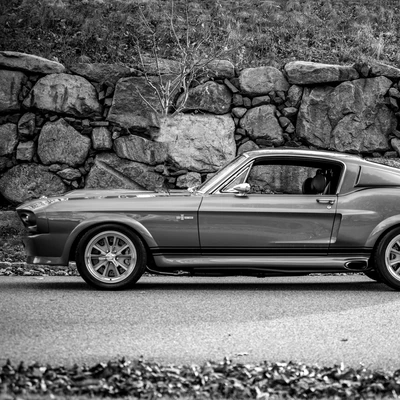

Agreed value pays the full pre-set amount you and your insurer established at policy inception on a covered total loss, with no depreciation and no post-loss negotiation. Stated value lets you declare a dollar amount when you buy the policy, but the insurer typically pays the lesser of that stated amount or the vehicle's actual cash value (ACV) at the time of loss, which means the number on your declarations page is a ceiling, not a guarantee. For classic car owners, the difference between these two valuation methods can mean tens of thousands of dollars at claim time. According to MoneyGeek's April 2026 analysis of 766,080 quotes from 16 classic car insurers across 900 ZIP codes, agreed value is the standard valuation offered by specialty collector carriers like Hagerty, Grundy, and American Collectors. This article explains exactly how each valuation method works, compares them side by side with a real-dollar claim scenario, covers how actual cash value fits into the picture, and walks through how to determine the right agreed value for your collector vehicle.
How Does Agreed Value vs Stated Value Work for Classic Cars?
Agreed value and stated value both establish a dollar figure for your classic car on the insurance policy, but they deliver dramatically different results when you file a total loss claim. Agreed value guarantees payment of the full insured amount with no depreciation deduction, while stated value gives the insurer discretion to pay the lesser of your stated amount or the vehicle's depreciated actual cash value.
The distinction matters because classic cars do not behave like modern daily drivers in the insurance market. A 2026 sedan depreciates predictably from the moment it leaves the dealership. A 1969 Chevrolet Camaro Z/28 in concours condition appreciates over time as supply shrinks and collector demand grows. Standard auto insurance uses ACV, which applies depreciation formulas built for modern vehicles. Those formulas produce payouts that can be $20,000 to $50,000 below the actual collector value of an appreciating classic. Both agreed value and stated value attempt to solve this problem, but only agreed value solves it completely. Stated value offers an improvement over ACV but retains an escape clause that allows the insurer to fall back on depreciated value at claim time. Understanding which method your policy uses is the single most important factor in protecting the true financial value of a collector vehicle.
What Is Agreed Value Coverage?
Agreed value coverage is a valuation method where you and the insurer determine the vehicle's worth at policy inception, document that value with appraisals or comparable sales data, and lock it into the policy as the guaranteed payout on a covered total loss. Agreed value pays every dollar of the insured amount with no depreciation, no post-loss negotiation, and no insurer discretion to reduce the settlement based on market conditions at the time of the claim.
The process starts with establishing the vehicle's current collector market value. For high-value vehicles, specialty carriers typically require a professional appraisal from a certified automotive appraiser. The appraisal documents the vehicle's condition, originality, restoration quality, provenance, and any modifications. For more common collector vehicles, the insurer may accept comparable sales data from auction results and the Hagerty Price Guide, the industry-standard reference for collector vehicle valuation. You and the insurer review the documentation, agree on a value, and that figure becomes the policy's coverage ceiling.
Hagerty calls its agreed value product "Guaranteed Value" and includes all applicable sales taxes in the payout, a detail that can add $3,000 to $8,000 on a high-value vehicle. According to Compare.com's 2026 analysis, agreed value policies cost 30% to 40% less than standard auto insurance because the restricted mileage and garage storage requirements of collector policies produce a lower risk profile. The agreed value structure is the defining feature of specialty classic car insurance and the primary reason collector owners choose it over standard auto coverage. The concept parallels replacement cost in property insurance, where the payout reflects what it actually costs to replace the item rather than its depreciated worth.
What Is Stated Value Coverage?
Stated value coverage is a valuation method where you declare the vehicle's worth when purchasing the policy, but the insurer retains the right to pay either the stated amount or the vehicle's actual cash value at the time of loss, whichever is less. Stated value creates a ceiling on the payout, not a guarantee, because the insurer can still apply depreciation and market comparisons to reduce the settlement below the stated amount.
The confusion around stated value is widespread. Many classic car owners see a dollar figure on their declarations page and assume that number is what they will receive on a total loss. In practice, the stated value often functions as a maximum limit rather than a promised payment. If you state your vehicle at $80,000 but the insurer's ACV assessment at claim time comes back at $55,000, the insurer pays $55,000. The $80,000 on your policy influenced your premium calculation, meaning you paid premiums based on $80,000 of coverage, but you received $55,000 at claim time. That $25,000 gap is the financial risk that stated value introduces.
Stated value policies do carry lower premiums than agreed value policies because the insurer's actual exposure is lower. The insurer knows it can fall back on ACV, which reduces its maximum payout risk. For lower-value collector vehicles where the gap between stated value and ACV is narrow, stated value can be a cost-effective choice. For high-value classics, restomods, or vehicles with significant custom work, the premium savings of stated value are small relative to the payout risk. An independent agent who works with multiple carriers can show you the exact premium difference between agreed and stated value on your specific vehicle so you can make an informed decision based on real numbers rather than assumptions.
What Is Actual Cash Value on a Classic Car?
Actual cash value (ACV) on a classic car is the depreciated market value of the vehicle at the time of loss, determined by the insurer using depreciation schedules, comparable sales, and condition assessments after the claim is filed. ACV is the standard valuation method on regular auto insurance policies and is the weakest form of protection for collector vehicles because it applies depreciation formulas designed for modern cars to vehicles that are appreciating in value.
ACV works well for modern daily drivers. A 2022 Toyota Camry purchased for $30,000 has a predictable ACV of approximately $18,000 to $20,000 four years later. The depreciation curve is well-established, and the ACV accurately reflects what the vehicle would sell for on the open market. Classic cars do not follow that curve. A restored 1967 Ford Mustang purchased for $45,000 in 2019 might be worth $65,000 in 2026 because collector demand has increased while supply has decreased. ACV on that Mustang would apply a depreciation model that produces a payout far below $65,000, potentially as low as $30,000 to $35,000 depending on the insurer's methodology.
ACV also fails to account for custom work, restorations, and modifications. A restomod with a modern drivetrain, custom interior, and $40,000 in fabrication labor has a value far higher than what ACV comparables would suggest. The insurer's ACV assessment looks at similar-year, similar-model vehicles on the used market, not at the specific build quality and custom investment in your vehicle. For any collector vehicle of meaningful value, ACV is the riskiest coverage gap an owner can carry.
What Is the Difference Between Agreed Value and Stated Value?
The difference between agreed value and stated value is that agreed value guarantees the full insured amount on a total loss, while stated value gives the insurer discretion to pay less than the stated amount based on the vehicle's depreciated value at claim time. Agreed value eliminates post-loss valuation disputes; stated value introduces them.
FeatureAgreed ValueStated ValueActual Cash Value (ACV)Payout on Total LossFull agreed amount (guaranteed)Lesser of stated amount or ACVDepreciated market valueDepreciation AppliedNoYes (insurer can apply at claim)Yes (always applied)Payout GuaranteeYes, locked at inceptionNo, insurer retains discretionNo, determined after lossPremium CostHigher than stated; lower than standard autoLower than agreed valueLowest (standard auto pricing)Appraisal RequiredYes (for high-value vehicles)SometimesNoRecognizes ModificationsYes (documented and appraised)Partially (stated but not guaranteed)No (uses market comparables)Best ForHigh-value classics, restomods, rare vehiclesLower-value collectors, budget-consciousModern daily-driver vehicles onlyPost-Loss NegotiationNone (value pre-agreed)Possible (insurer may dispute)Common (insurer controls assessment)
Sources: Velocity Restorations 2025 classic car insurance analysis; Hagerty Guaranteed Value policy specifications; Hitchings Insurance stated value guide 2026; American Family Insurance agreed value vs stated amount guide; InsuredBetter 2026 carrier comparison.
The table illustrates why agreed value is the recommended structure for any collector vehicle of significant worth. Every row where stated value shows "insurer retains discretion" or "insurer may dispute" represents a risk that agreed value eliminates. The premium difference between agreed and stated value on a $50,000 classic car is typically $50 to $150 per year. The payout difference on a total loss can be $15,000 to $25,000. That trade-off strongly favors agreed value for the vast majority of collector vehicle owners.
What Happens at Claim Time with Agreed Value vs Stated Value?
At claim time, agreed value pays the full pre-set amount minus your deductible, while stated value triggers an insurer valuation process that may reduce the payout below the stated amount. The claim experience under agreed value is straightforward and predictable; the claim experience under stated value introduces uncertainty at the moment you need certainty most.
Consider a concrete scenario. You own a 1970 Chevrolet Chevelle SS 454 that you and your insurer agreed is worth $85,000. A fire destroys the vehicle. Here is how each valuation method handles the claim:
- Agreed value claim process: You file the claim. The insurer confirms the loss is covered. The insurer pays $85,000 (the agreed value) minus your deductible. No appraisal is needed at claim time because the value was established at policy inception. Hagerty's Guaranteed Value includes all applicable sales taxes in the payout. The process is direct, predictable, and typically completed faster than stated or ACV claims.
- Stated value claim process: You file the claim. The insurer confirms the loss is covered. The insurer then conducts its own ACV assessment, researching comparable sales, applying depreciation, and evaluating condition. If the insurer's ACV assessment returns $62,000, the insurer pays $62,000 (the lesser of the $85,000 stated amount or the $62,000 ACV), minus your deductible. You paid premiums based on $85,000 of coverage but received $62,000. The $23,000 gap comes out of your pocket.
- ACV claim process: You file the claim. The insurer conducts a full ACV assessment. The insurer determines the vehicle's depreciated market value using comparable sales and depreciation schedules. The payout might be $55,000 to $62,000 on a vehicle you know is worth $85,000 in the collector market. The gap between ACV and true collector value can reach $20,000 to $30,000 or more.
The claim scenario makes the financial stakes clear. Agreed value delivers certainty. Stated value delivers a number that looks good on paper but may not hold up at claim time. ACV delivers the lowest payout of all three methods for an appreciating collector vehicle. For families in Madison, Alabama who have invested years and tens of thousands of dollars into building or restoring a classic car, agreed value is the only method that guarantees the full return on that investment at claim time.
Is It Better to Insure Market Value or Agreed Value?
Agreed value is better than market value for insuring a classic car because market value (ACV) applies depreciation that undervalues appreciating collector vehicles, while agreed value locks in the vehicle's true collector worth with no depreciation. For any vehicle that is maintaining or increasing in value, agreed value provides superior financial protection over market value or ACV.
Market value works for modern vehicles because they depreciate predictably and the ACV assessment accurately reflects what the vehicle would sell for. Classic cars, restomods, and collector vehicles operate in a different market where value is driven by rarity, condition, provenance, and demand rather than by depreciation schedules. The comprehensive coverage on a standard auto policy uses ACV by default. Moving a collector vehicle to a specialty policy with agreed value replaces the ACV default with a guaranteed valuation that reflects the vehicle's real collector market worth.
The RV Industry Association, the Insurance Information Institute, and collector car industry sources all confirm that specialty vehicles, whether RVs, boats, or classic cars, benefit from valuation methods that account for appreciation rather than depreciation. According to NerdWallet, standard full-coverage auto insurance averages over $2,000 per year nationally. Specialty classic car insurance with agreed value averages $200 to $600 per year for most collector vehicles. The agreed value policy costs less and pays more at claim time, a rare combination in insurance that exists because collector vehicles present lower risk than daily drivers.
Which Is Better for a Classic Car: Agreed Value or Stated Value?
Agreed value is better for a classic car in most situations because it guarantees the full payout and eliminates the post-loss valuation uncertainty that stated value introduces. Stated value may be acceptable for lower-value collector vehicles where the gap between stated amount and ACV is narrow and the premium savings are meaningful relative to the vehicle's total worth.
The decision comes down to a simple risk assessment. On a $75,000 classic car, the premium difference between agreed and stated value might be $75 to $125 per year. The payout difference on a total loss could be $15,000 to $25,000. Paying an extra $100 per year to protect against a $20,000 loss is a trade that overwhelmingly favors agreed value. On a $12,000 vintage pickup truck, the payout gap between stated value and ACV might be only $1,500 to $3,000, and the premium savings of stated value might cover that gap over several years. For vehicles under $15,000 to $20,000 in collector value, stated value can be a reasonable choice. Above that threshold, agreed value is the clear winner.
An umbrella policy layered on top of either structure extends liability limits beyond the base classic car policy, which is especially important for owners of high-value collections worth $200,000 or more. The umbrella does not change the valuation method on the collector policy, but it adds a critical second layer of liability protection that covers judgments and settlements exceeding the base policy's limits.
How Do You Determine Agreed Value for a Classic Car?
Determining agreed value for a classic car requires gathering documentation that establishes the vehicle's current collector market worth and presenting it to the insurer for mutual agreement. The process involves a professional appraisal, comparable sales research, detailed photography, and build documentation that proves the vehicle's condition, originality, and any custom or restoration work.
- Get a professional appraisal: A certified automotive appraiser inspects the vehicle in person and produces a written report documenting condition, originality, restoration quality, provenance, and current market value. High-value vehicles ($50,000+) typically require a formal appraisal for agreed value eligibility.
- Research comparable sales: The Hagerty Price Guide is the industry-standard reference for collector vehicle valuation. Auction results from Bring a Trailer, Barrett-Jackson, Mecum, and RM Sotheby's provide real transaction data for similar vehicles. Document recent sales of comparable year, make, model, and condition vehicles to support your proposed value.
- Photograph the vehicle thoroughly: High-resolution photos of the exterior, interior, engine bay, trunk, undercarriage, and any notable features or custom work create a visual record that supports the appraisal and helps the insurer verify condition.
- Document all build and restoration work: Receipts, invoices, and records of restoration labor, parts purchases, paint work, engine rebuilds, and custom fabrication establish the financial investment in the vehicle. For restomods, this documentation is critical because comparable sales may not reflect the specific upgrades installed.
- Submit to the insurer and negotiate: Present the appraisal, comparables, photos, and build documentation to the specialty carrier. The insurer reviews the materials and either accepts your proposed value or suggests an adjusted figure. Once both parties agree, the value is locked into the policy.
Keeping the agreed value current matters. Collector car values shift with market conditions, and an agreed value that was accurate two years ago may undervalue the vehicle today. Some carriers offer inflation guard provisions that automatically increase the agreed value by 4% to 6% annually, according to InsuredBetter's 2026 carrier comparison. Review and update your classic car insurance valuation at every renewal to confirm the agreed value reflects the vehicle's current worth. An outdated appraisal protects an outdated value.
How Do Modifications Affect Classic Car Valuation?
Modifications affect classic car valuation by adding value that standard ACV assessments and many stated value policies fail to capture. Engine swaps, custom fabrication, modern drivetrains, hand-stitched interiors, and performance upgrades increase a vehicle's true worth, but only agreed value coverage consistently accounts for that added value because the modifications are documented, appraised, and built into the agreed amount at policy inception.
A factory-original 1971 Ford Bronco might be worth $65,000 in restored condition. A restomod version of the same Bronco with a modern Coyote V8 engine, custom suspension, custom leather interior, and $40,000 in fabrication labor might be worth $130,000. Under ACV, the insurer looks at comparable 1971 Broncos on the used market and produces a figure based on factory-original examples, potentially paying $60,000 to $70,000 on a vehicle worth $130,000. Under stated value, the owner might declare $130,000, but the insurer's ACV assessment at claim time could still produce a $70,000 payout. Under agreed value, the $130,000 figure is documented, appraised, agreed upon, and guaranteed.
Undisclosed modifications create a separate risk. If you install a supercharged engine, upgrade the brakes, or make structural changes without notifying your insurer, the vehicle's actual risk profile differs from what the policy was written to cover. Undisclosed modifications can result in a denied claim because the insurer argues the vehicle was materially different from what was insured. Always disclose modifications and update your agreed value to reflect the added investment. Premium factors will adjust, but a small premium increase is far better than a denied claim on a $100,000 build.
How Often Should You Update Your Agreed Value?
You should update your agreed value at every policy renewal, which is typically every 12 months, and immediately after any major modification, restoration completion, or significant market shift. An outdated agreed value leaves you underinsured because the guaranteed payout reflects what the vehicle was worth one or two years ago, not what it is worth today.
Collector car values are not static. The overall classic car market has stabilized after the post-pandemic boom, according to 2026 market data from InsureWiseHubs, but individual models continue to shift. A vehicle that was worth $55,000 two years ago may be worth $70,000 today because of increased collector demand for that specific model. Without an updated appraisal and a revised agreed value, the policy pays $55,000 on a total loss, leaving $15,000 unrecovered. Some carriers offer inflation guard provisions that automatically increase the agreed value by 4% to 6% per year, which provides a cushion between renewals. Inflation guard is not a substitute for a full reappraisal, but it prevents the agreed value from falling significantly behind the market during the policy period.
Bundling policies across your classic car, daily driver, and home coverage through an independent agent can offset the modest premium increase that comes with a higher agreed value, keeping total insurance costs manageable while maintaining full protection on the collector vehicle.
Does Stated Value Guarantee a Payout?
No, stated value does not guarantee a payout of the stated amount. Most stated value policies pay the lesser of the stated amount or the vehicle's actual cash value at the time of loss, which means the insurer retains the right to reduce the payout based on depreciation and market comparisons regardless of the number on your declarations page.
This is the single most important fact about stated value that many classic car owners misunderstand. The stated amount influences your premium, but it does not bind the insurer to pay that amount. Velocity Restorations' 2025 insurance analysis describes this as "a false sense of security" because the stated number looks like a guarantee on paper but functions as a cap in practice. If the insurer's ACV assessment produces a number lower than your stated value, the insurer pays the lower number. You absorbed the higher premium associated with the stated amount but did not receive the corresponding payout.
The most common mistakes classic car owners make with stated value policies include:
- Assuming the stated amount on the declarations page is the guaranteed payout on a total loss
- Paying premiums based on the stated amount without realizing the insurer can pay ACV instead
- Failing to maintain updated appraisals that would support a higher ACV assessment at claim time
- Choosing stated value for high-value vehicles where the payout gap can reach $15,000 to $25,000 or more
- Not comparing the premium difference between stated and agreed value, which is often only $50 to $150 per year
The lesson for classic car owners is straightforward: if you want a guaranteed payout on a total loss, agreed value is the only structure that delivers it. Stated value is better than ACV alone because it sets an upper boundary, but it does not eliminate the insurer's ability to apply depreciation at claim time. For any vehicle worth more than $15,000 to $20,000, the premium difference between stated value and agreed value is a small price for the certainty that agreed value provides.
Frequently Asked Questions
What Value Should I Put on My Car Insurance?
The value you put on your car insurance should reflect the vehicle's current collector market worth, supported by a professional appraisal and comparable sales data. For agreed value policies, the number you establish at inception is the amount you receive on a total loss, so accuracy matters. Overvaluing increases premiums unnecessarily. Undervaluing leaves you with a payout below the vehicle's true worth. Use the Hagerty Price Guide, recent auction results, and a certified appraiser to establish a value that matches what the vehicle would sell for in the current collector market.
Is Agreed Value More Expensive Than Stated Value?
Yes, agreed value premiums are slightly higher than stated value premiums because the insurer's payout risk is higher. The insurer guarantees the full agreed amount with no ability to reduce it at claim time, which increases the carrier's maximum exposure. The premium difference is typically $50 to $150 per year on a $50,000 to $75,000 collector vehicle. For that modest additional cost, you eliminate the risk of a $15,000 to $25,000 payout gap at claim time. The credit score and driving record factors that influence standard auto pricing also apply to collector policies.
Can You Switch from Stated Value to Agreed Value?
Yes, you can switch from stated value to agreed value by contacting your insurance agent, providing an updated appraisal or comparable sales data, and upgrading your policy. Some carriers offer both options and can convert the policy mid-term. Other carriers specialize exclusively in agreed value and may require a new policy. An independent agent who works with multiple specialty carriers can compare options and handle the transition. The switch should happen before a loss, not after, because stated value limitations only surface at claim time when it is too late to change.
Does Agreed Value Include Sales Tax in the Payout?
Some agreed value policies include sales tax in the total loss payout, while others do not. Hagerty's Guaranteed Value product specifically includes all applicable sales taxes in the payout amount, unless prohibited by state law. This detail can add $3,000 to $8,000 to the settlement on a high-value vehicle. Grundy and American Collectors handle sales tax differently depending on the policy and state. Confirm whether your antique car coverage includes sales tax before finalizing the agreed value, because a policy that excludes sales tax effectively pays less than the stated agreed amount when you purchase a replacement vehicle.
What Happens If My Classic Car Appreciates After I Set the Agreed Value?
If your classic car appreciates after you set the agreed value, the policy pays only the original agreed amount, not the current market value. This is why updating the agreed value at every renewal is important. Some carriers offer inflation guard provisions that automatically increase the agreed value by 4% to 6% per year to account for market appreciation between renewals. Without inflation guard or an updated appraisal, appreciation above the agreed value is unprotected. Contact your agent at least 30 days before renewal to submit an updated appraisal and adjust the agreed value to reflect current market conditions.
The Bottom Line
Agreed value and stated value both put a dollar figure on your classic car, but only agreed value guarantees that figure at claim time. Stated value gives the insurer an escape clause to pay less. ACV ignores the collector market entirely and applies depreciation designed for modern vehicles. For any classic car, restomod, or collector vehicle worth more than $15,000 to $20,000, agreed value is the clear choice because the premium difference is modest and the payout protection is absolute. The claim scenario makes the math simple: an extra $75 to $125 per year in premium protects against a $15,000 to $25,000 payout gap that stated value and ACV leave open.
An independent agent who works with Hagerty, Grundy, American Collectors, and other specialty carriers can show you the exact premium difference between agreed and stated value on your specific vehicle and help you set the right agreed value with proper documentation. We help classic car owners across Alabama make that comparison every day at UR Choice Insurance. Call us at (256) 692-5562 to get your collector vehicle insurance quote with agreed value protection.